
Advertorial

Why Eunoia Beats Gummies, Cocoa, and Coffee Formulations
I'm a Nutritionist. Here's Why I Stopped Recommending Cortisol Gummies, “Sleep Cocoa,” and Mushroom Coffees to My Clients
Ashley Hawks, RD, has spent the last decade watching the cortisol category fill up with gummies, drink mixes, and creative formulations that look better than they work. Here's the comparison breakdown — and the one product she's added to her actual rotation.

I am a registered dietitian. I have spent fifteen years telling my clients that the supplement industry oversells and underdelivers. I have spent the last five years specifically watching the cortisol category fill up with gummies that taste like candy, hot cocoa mixes you stir into milk, mushroom coffees that promise to lower cortisol while you drink them, and lavender-flavored powders that turn your nightstand into a wellness shrine.
I have a confession. Almost none of them work the way the packaging suggests they do.
I'm going to walk you through the comparison the same way I walk my clients through it, because the differences are not subtle once you know what to look for. There is exactly one product I now recommend in this space, and I want to explain why.

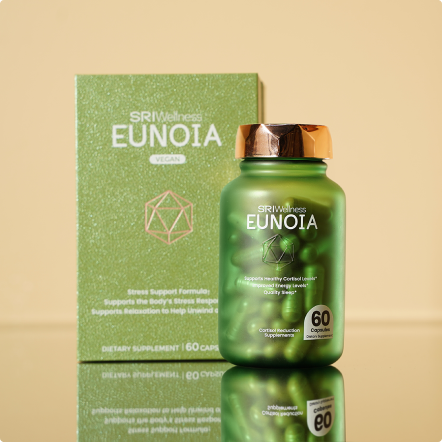
“This season of my life has been beautiful and incredibly stressful all at once. Trying for a baby comes with so much waiting, hoping, and unfortunately — stress, which is the last thing your body needs in this process. EUNOIA has helped me feel grounded through it all. I sleep better, I feel more like myself during the day, and I love that the ingredients are clean and gentle. It's been a quiet, steady support when I needed it most.”

Carm, 43
Verified User

The Gummy Problem
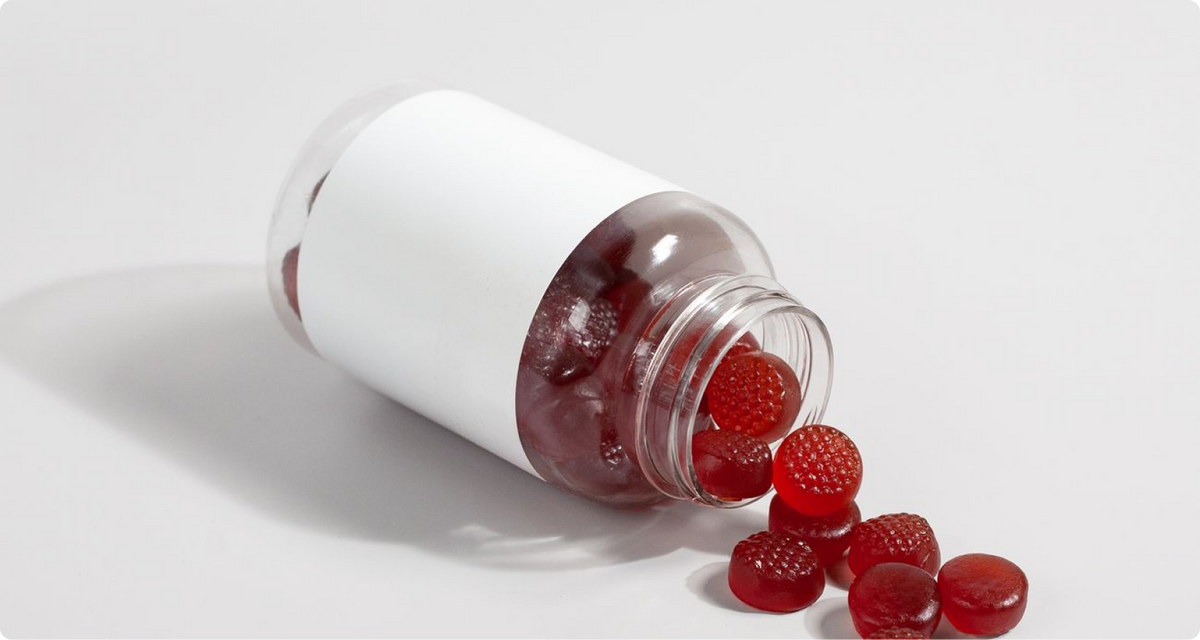
Cortisol gummies are the fastest-growing format in this category, and they are categorically the least effective. There are four reasons.
- Gummies cannot carry meaningful active ingredient doses. This is a formulation constraint, not a brand choice. The gummy matrix — sugar or sugar alcohol, gelatin or pectin, citric acid, flavoring — can only hold a small amount of active ingredient before the texture and taste fail. Most gummy ashwagandha products contain between 50 and 150mg per serving. The clinical dose of KSM-66 ashwagandha in the studies that show cortisol reduction is 300mg. A gummy product at 100mg is delivering approximately one-third of the studied dose, with predictably one-third of the effect.
- Gummies are sugar. Even the “low sugar” versions contain glucose, fructose, sugar alcohols, or maltodextrin, which produce a small insulin response. You are then taking a supplement designed to help you sleep that is gently spiking your blood sugar at bedtime. The two effects partially cancel out.
- Gummies require gelatin or pectin. Gelatin is animal-derived, which excludes the growing number of vegan and vegetarian customers. Pectin is fine but adds nothing functionally — it's binder, not active.
- Gummy potency degrades faster. Heat, light, and moisture all degrade ashwagandha and most botanicals. The gummy matrix is more vulnerable to all three than a sealed capsule. The dose on the label and the dose in the gummy at month three of shelf life are not necessarily the same number.
The “Sleep Cocoa” Problem

Hot cocoa–style sleep drinks have become a popular format — typically marketed as a magnesium-and-adaptogen powder you stir into hot water or milk before bed. The format is appealing. The biochemistry is more complicated.
- The dose problem repeats. Like gummies, drink-mix formats are limited in how much active ingredient they can carry before the taste fails. Most “sleep cocoa” products are pleasant to drink because they contain relatively small amounts of the actives. The marketing materials emphasize the long ingredient list — sometimes “nine adaptogens” or “twelve calming superfoods” — but each one is present in a fraction of its clinical dose.
- The sugar question returns. Cocoa, even unsweetened, contains theobromine — a stimulant similar to caffeine, with a longer half-life. A “sleep cocoa” with real cocoa in it is delivering a mild stimulant to your nervous system right before bed. The other ingredients are working against it.
- The ritual is the active ingredient. Many of the testimonial benefits of sleep cocoa products are likely coming from the ritual itself — sitting in low light, holding a warm mug, signaling to your nervous system that the day is over. This is real and useful. It is also not an effect of the supplement. You can get it from chamomile tea for two dollars a box.
The Mushroom Coffee Problem
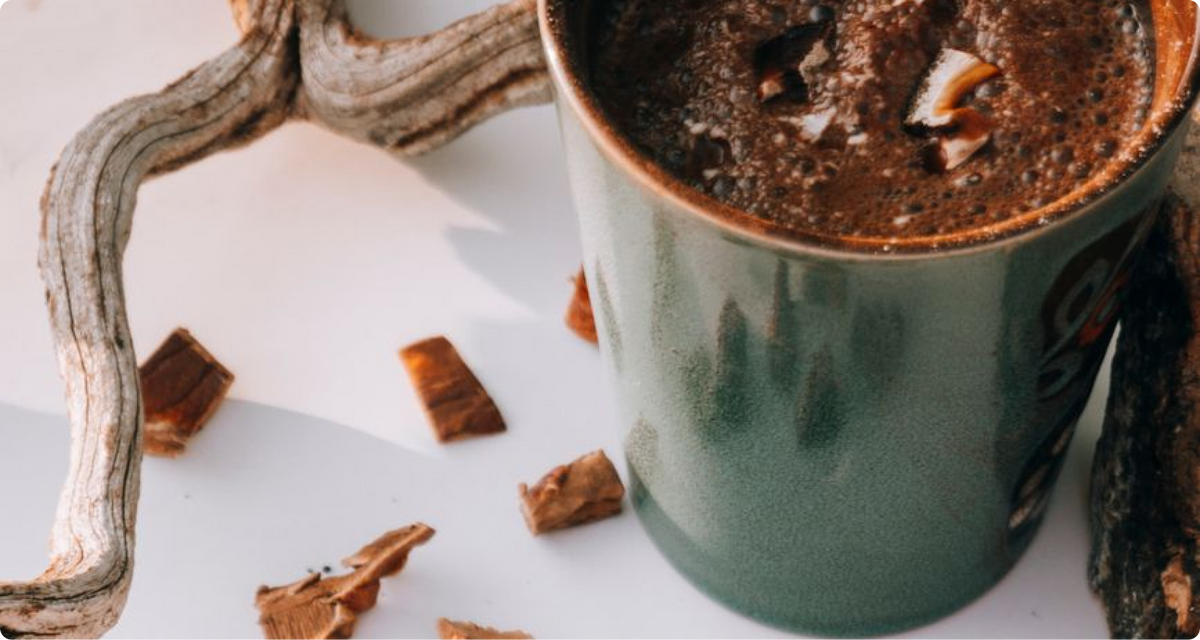
Mushroom coffees — typically lion's mane, reishi, cordyceps, sometimes chaga — have built a niche by promising “calm focus” and “stress regulation” in the morning. The problem is twofold.
- Most of these mushrooms don't lower cortisol. Lion's mane has interesting cognitive research but no significant cortisol data. Cordyceps is energy-focused. Reishi has some sleep evidence but mostly small-scale. The one mushroom with credible cortisol data — reishi — is in the evening category, not the morning one.
- Coffee itself spikes cortisol. This is the bigger issue. Caffeine produces an acute cortisol spike, particularly when consumed on an empty stomach. A “mushroom coffee” pairing a small dose of an adaptogen with a moderate dose of caffeine is doing two opposing things at once. The caffeine is the stronger signal, and it wins.
The Capsule She Now Recommends

The product I have been recommending is a capsule called Eunoia. It is the only product I've found in this category that solves all of the problems above at once.
- Form factor. It's a capsule, not a gummy or a drink. The capsule can carry the clinical dose without compromise. Two capsules deliver 300mg of Organic KSM-66 ashwagandha — the exact dose used in the cortisol-reduction trials. There is no formulation ceiling forcing the dose down.
- Sourcing. The KSM-66 is organic. This matters because non-organic ashwagandha is grown with synthetic pesticides, and the root is the part of the plant that gets concentrated into the extract. Organic certification is the only thing that meaningfully filters out pesticide residue in this category.
- Supporting actives. The full formula is 300mg KSM-66 ashwagandha, 105mg magnesium glycinate (the form I've been recommending separately for years), 100mg L-theanine, 75mg passion flower, and 50mg chamomile. All at doses that contribute to the effect, not as label decoration.
- Transparency. Every active ingredient is listed at its actual dose. No proprietary blend hiding what's in there. Every batch is independently tested for heavy metals, microbial contamination, and active ingredient potency, and the lab results are published online with the lot numbers.
- What's not in it. No melatonin. No sedatives. No sugar. No gelatin. No artificial colors or flavors. No filler claiming to be an active. It is the cleanest cortisol formula I have seen in this category, and the only one that does not require me to make compromises on what I'd ideally recommend.
TRY EUNOIA
PRIME DAY SALE (U.S. only)
Save on EUNOIA
Free shipping on 2 or more bottles
The Protocol
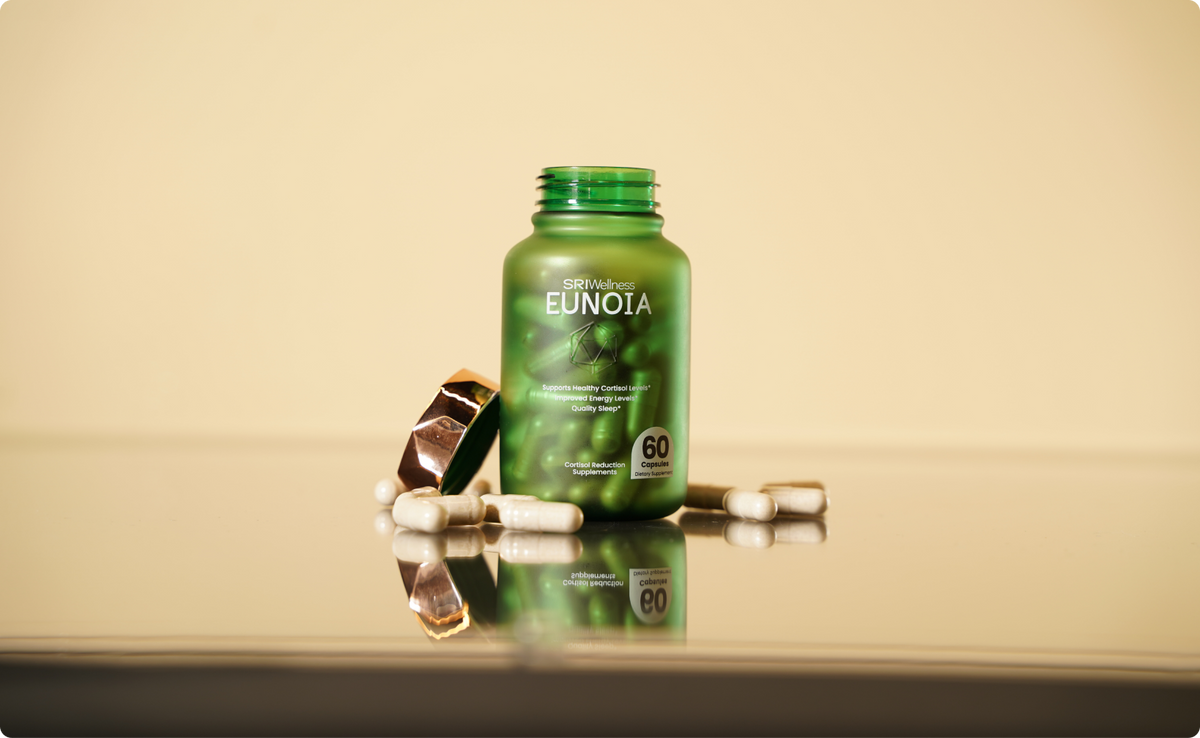
The protocol is straightforward. Two capsules of Eunoia, with water, an hour before bed. Take it consistently for at least eight weeks — the time frame in the clinical trials where cortisol reduction shows up. The first bottle is mostly the magnesium and L-theanine landing. The second bottle is when the KSM-66 effect on cortisol becomes apparent.
What clients report, in order of how quickly it shows up: easier wind-down at 11 p.m., fewer 3 a.m. wake-ups, less jaw clench, less puffiness in the morning, fewer cravings, more stable mood.
The Short Version
If you're shopping the cortisol or sleep supplement category, here is the short version of what I tell my clients.
- Skip the gummies. They cannot carry the dose.
- Skip the sleep cocoa. The biochemistry is working against itself.
- Skip the mushroom coffee. The caffeine wins.
- Take the capsule with the clinical dose of Organic KSM-66 ashwagandha, the right magnesium form, and the right supporting actives. There is exactly one I recommend.
*Statements have not been evaluated by the FDA. This article is informational and not intended to diagnose, treat, cure, or prevent any disease. Consult your physician or a licensed practitioner before starting any new supplement regimen. Individual results may vary.
Limited Time Offer
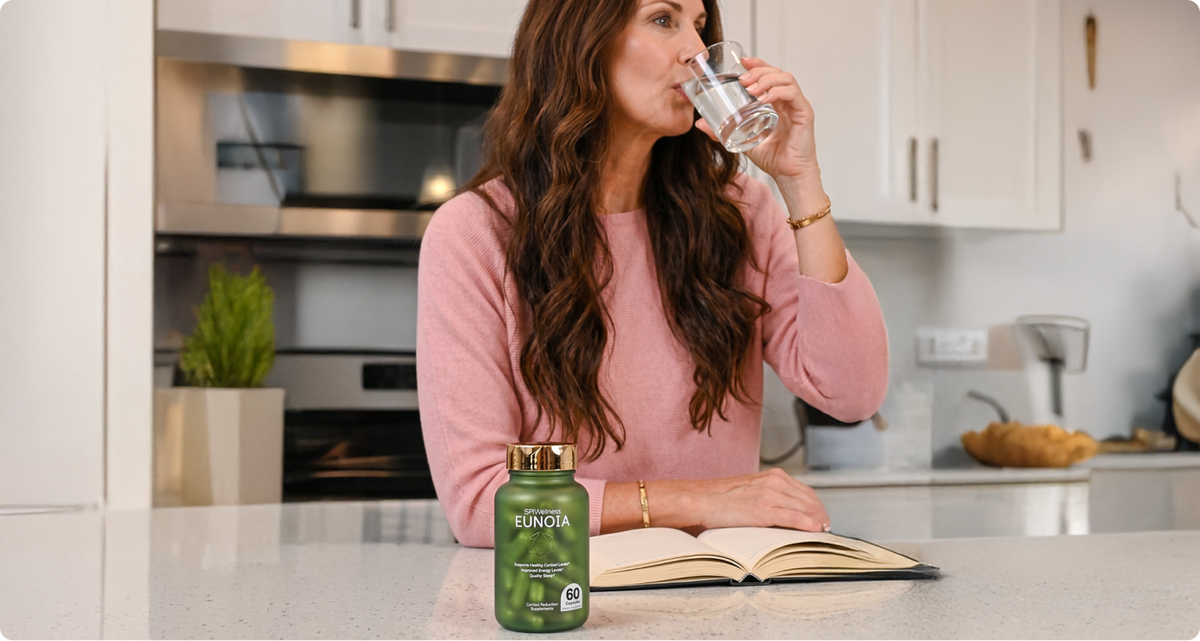
PRIME DAY SALE (U.S. only)
Save on EUNOIA
Free shipping on 2 or more bottles
“This season of my life has been beautiful and incredibly stressful all at once. Trying for a baby comes with so much waiting, hoping, and unfortunately — stress, which is the last thing your body needs in this process. EUNOIA has helped me feel grounded through it all. I sleep better, I feel more like myself during the day, and I love that the ingredients are clean and gentle. It's been a quiet, steady support when I needed it most.”
Carm, 43
Verified User