
Advertorial

Advertorial
Elevated Cortisol Is Now Linked to Heart Disease, Type 2 Diabetes, and Memory Loss. Here's What a Nutritionist Says Most Women Should Be Doing About It.
After fifteen years of clinical practice, Ashley Hawk, RD, has watched the science go from “stress is bad for you” to “elevated cortisol is one of the most measurable risk factors for the diseases most likely to kill you.” Here's what changed.

For most of Ashley Hawk's early career, the conversation about stress and health was vague. She would tell clients that chronic stress was “not great for you,” recommend meditation and exercise, and hope that was enough. The medical literature has gotten more specific since then. So has her practice.
What used to be a soft conversation about stress is now a hard conversation about cortisol, and the cortisol literature has gotten unambiguous. People are talking about a hormone that is now demonstrably linked to heart disease, type 2 diabetes, cognitive decline, and accelerated aging. These are the four conditions women in their 30s and 40s tell me they fear most. And cortisol is upstream of all of them.
Ashley Hawk, RD, runs a private nutrition practice in Tucson focused on women in their 30s and 40s. She is one of a growing number of practitioners building their work around what she calls “the cortisol upstream” — the idea that for many women, the symptoms of perimenopause, the metabolic shifts, the sleep problems, and the disease risks they're seeing in their own families are not separate problems. They're downstream effects of a single hormone running too high for too long.
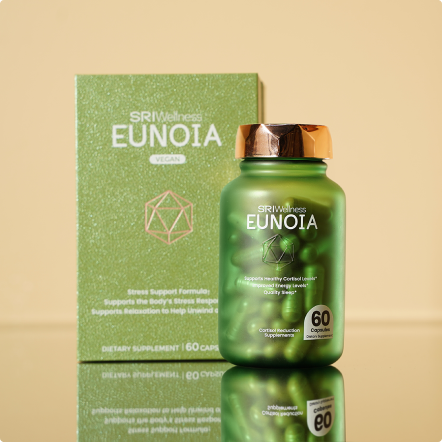
“This season of my life has been beautiful and incredibly stressful all at once. Trying for a baby comes with so much waiting, hoping, and unfortunately — stress, which is the last thing your body needs in this process. EUNOIA has helped me feel grounded through it all. I sleep better, I feel more like myself during the day, and I love that the ingredients are clean and gentle. It's been a quiet, steady support when I needed it most.”

Carm, 43
Verified User

What Elevated Cortisol Is Actually Doing

Cortisol is the body's primary stress hormone. In healthy doses, it wakes you up, focuses you, pulls you through. In chronic doses, it acts as a slow-motion physiological injury.
The four areas where the research is strongest:
- Heart disease. Elevated cortisol is independently associated with hypertension, atherosclerosis, and increased cardiovascular event risk. The Whitehall II cohort, the CARDIA study, and decades of follow-up work in Psychosomatic Medicine have documented the relationship. Cortisol drives sodium retention, vascular constriction, and endothelial inflammation — three mechanisms that collectively raise heart disease risk over time. Heart disease is the number one killer of American women. Cortisol is in the causal chain.
- Type 2 diabetes. Cortisol's job description includes raising blood glucose. Chronic elevation means chronic glucose dysregulation, which means insulin resistance, which means — eventually, for some — type 2 diabetes. Multiple large cohort studies have documented the pathway. The “cortisol cluster” symptom of stubborn midsection weight is the visible warning sign of the metabolic damage happening underneath.
- Cognitive decline and memory loss. Sustained cortisol elevation damages the hippocampus, the brain region responsible for memory consolidation. Robert Sapolsky's foundational research and a long body of follow-up work in Lancet and Neuroscience have established the pathway. Chronic cortisol is one of the most-cited mechanisms linking lifelong stress to dementia and Alzheimer's risk.
- Accelerated aging. The connection between chronic cortisol, oxidative stress, and telomere shortening is now well-documented. Telomeres are the protective caps on chromosomes that shorten with each cell division — when cortisol accelerates that shortening, cells age faster. Visually, this shows up as the “cortisol face” women on TikTok have been describing: dullness, puffiness, jaw softening, hair thinning. Cellularly, it shows up as biological age moving faster than chronological age.

The Cortisol Cluster as Early Warning

The diseases above show up after decades of cortisol damage. The early-warning signs show up much earlier, often in a woman's mid-30s. Ashley calls this constellation the cortisol cluster, and she's been seeing it in her clients with increasing frequency.
The cluster:
The 3 a.m. wake-up that lasts an hour. A jaw that's tight by 4 p.m. A puffy face in the morning that doesn't track with how much you ate or drank. Stubborn midsection weight that doesn't respond to diet. Sugar cravings at 3 p.m. and 9 p.m. Mood swings that cluster in the week before your period and feel new. The wired-and-tired feeling — exhausted but unable to relax.
Why It Hits Women Hardest in Their 30s and 40s

The cortisol cluster typically escalates noticeably between ages 35 and 45. The biology has been increasingly well-mapped.
Progesterone is one of the body's primary cortisol-buffering hormones. It calms the nervous system, helps you sleep, and softens the stress response. In perimenopause — which can begin as early as the mid-thirties — progesterone is the first hormone to drop, often a full decade before estrogen.
This is the part most women aren't told. You can be doing everything right and still feel like your stress response has gotten worse for no reason. It hasn't gotten worse. The hormone that used to absorb it isn't there anymore. The conversation about perimenopause has been almost entirely about estrogen. The progesterone-cortisol piece is the one that's been quietly under-discussed.
The result is that a woman in her late 30s with a perfectly normal cortisol output can experience the symptoms of dramatically elevated cortisol — because the buffering system has thinned out. The cluster gets louder. The disease risks accumulate faster.
TRY EUNOIA
PRIME DAY SALE (U.S. only)
Save on EUNOIA
Free shipping on 2 or more bottles
What Actually Helps
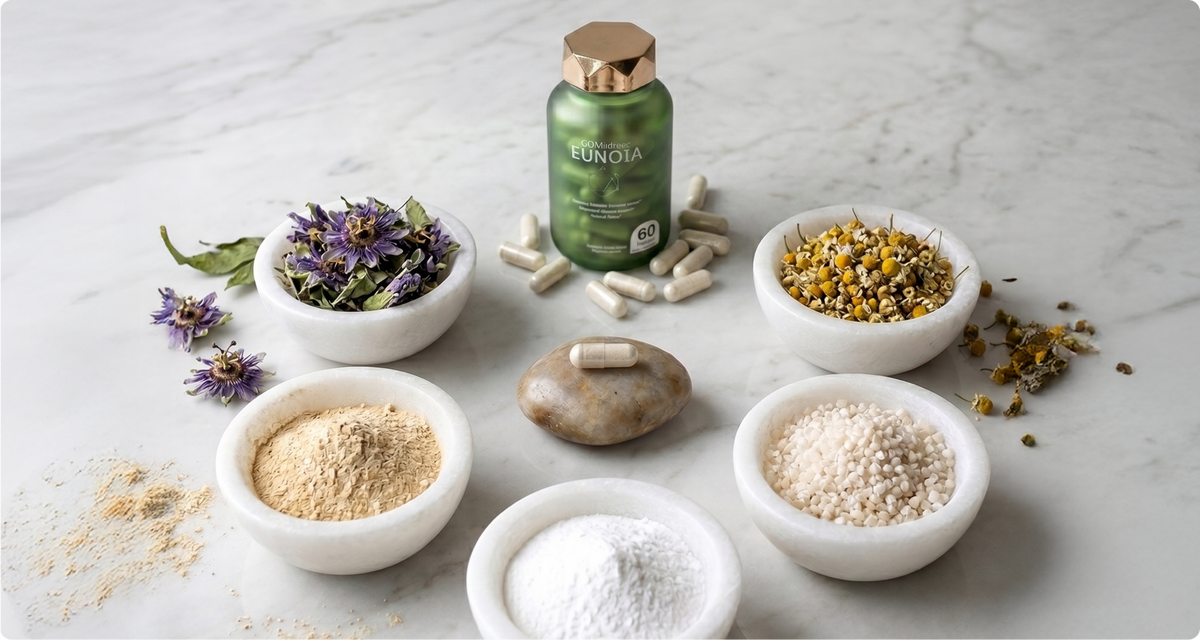
The interventions Ashley now recommends to clients dealing with the cortisol cluster are smaller and more specific than the wellness industry suggests. The ones with actual research behind them:
- Magnesium glycinate. The most bioavailable form of magnesium, with consistent evidence for supporting deeper sleep, reducing muscle tension, and modulating cortisol. Most American women are deficient even when they eat well.
- L-theanine. An amino acid from green tea that supports alpha-wave brain activity — the calm-but-alert state.
- Ashwagandha, specifically the KSM-66 extract. The most clinically-studied adaptogen in the world for cortisol regulation. Peer-reviewed trials at the standardized 300mg dose show 22 to 30 percent reductions in serum cortisol over 8 to 12 weeks of supplementation.
- Sleep prioritization. Getting to bed before midnight, protecting the early-morning hours when cortisol naturally rises.
- Movement, but not exhaustion. Walking, weightlifting, and low-zone cardio do more for cortisol than the morning HIIT class most women in this demographic are pushing themselves through.
Notably not on her list: the “cortisol cocktail” trend, melatonin, generic stress vitamins, and the 10-in-1 cortisol stacks proliferating on Amazon. “The ingredients with actual evidence are a much smaller list than the supplement industry suggests,” she says.
The Capsule She Now Recommends

Ashley increasingly recommends a single product to clients dealing with the cluster: a nighttime capsule called Eunoia. It's built around 300mg of Organic KSM-66 ashwagandha — the clinical dose — paired with magnesium glycinate, L-theanine, passion flower, and chamomile.
It uses the studied form at the studied dose, doesn't include melatonin, doesn't bury the formula in a proprietary blend, and publishes the lab results from every batch. Those four things put it in a small category of supplements I'm willing to recommend.
The protocol she uses is straightforward. Two capsules with water, an hour before bed. Eight weeks minimum — which corresponds to the time frame in the clinical trials where cortisol reduction shows up.
Limited Time Offer

PRIME DAY SALE (U.S. only)
Save on EUNOIA
Free shipping on 2 or more bottles
Closing
The medical research on cortisol has moved faster than the cultural conversation about it. The connections to heart disease, type 2 diabetes, cognitive decline, and accelerated aging are well-established and increasingly well-quantified. The early-warning cluster shows up first in women's 30s and 40s, when intervention is most useful and least uncomfortable.
Women have been told to manage their stress for years. The reality is, this isn't a stress conversation anymore. It's a long-term health conversation. The cortisol cluster is the early warning. The interventions are real. The window is now.
*Statements have not been evaluated by the FDA. This article is informational and not intended to diagnose, treat, cure, or prevent any disease. Consult your physician or a licensed practitioner before starting any new supplement regimen. Individual results may vary.
“This season of my life has been beautiful and incredibly stressful all at once. Trying for a baby comes with so much waiting, hoping, and unfortunately — stress, which is the last thing your body needs in this process. EUNOIA has helped me feel grounded through it all. I sleep better, I feel more like myself during the day, and I love that the ingredients are clean and gentle. It's been a quiet, steady support when I needed it most.”
Carm, 43
Verified User